April 13, 2018

European Workers Betrayed By Andrew Spannaus, April 12, 2018


Unlike the U.S., Europe has strong, influential labor unions; yet they have been unable, or unwilling, to stop the austerity-based policies demanded by European institutions, reports Andrew Spannaus.

By Andrew Spannaus  Special to Consortium News
in Milan, Italy

Railway workers are striking across France, bringing up to 80 percent of high-speed trains to a halt in recent days. In a major European country dependent on rail for a significant portion of its transportation, the protests are predictably causing chaos, as organized labor flexes its muscles to show that it is still a force to be reckoned with.
On April 10, German airport workers also went on strike, leading to the cancellation of over 800 flights by the national air carrier, Lufthansa. In this case the dispute is over a pay increase for around 2.3 million public sector employees, who have seen their incomes stagnate despite the country’s economic growth overall.
Such protest actions are not uncommon across Europe, and indeed have come to be accepted as a fact of life in many countries. Labor union membership varies greatly throughout the continent, from less than 10 percent in France – despite the effective strikes – to a high of around 70 percent in Scandinavian countries such as Sweden and Denmark. Yet even when their membership figures are modest,unions often have a central role in collective bargaining, and they are eager to show that they are still relevant in a world that has changed greatly due to deregulation and globalization over the past 35 years.
Organized labor’s clout in Europe is declining though, which should not come as a surprise. One of the central tenets of the economic policies followed by the European Union is “flexibility” of the labor market, part of the overall neoliberal philosophy that views any sort of restrictions and rules on labor and capital as stifling profit-making, free enterprise.
Making Easier to Fire People

EU: Betraying Workers
Since the 1990s in particular, there has been a concerted, top-down effort to weaken protections for workers, claiming this is the only way to attract capital and unleash a new wave of economic growth. The E.U. constantly harps on the need for “structural reforms” that allow for “removing the constraints to job creation and labor market participation.” This generally means making it easier to fire people, which in theory will allow companies to hire new workers when needed, without the fear of a permanent cost burden in the future.
Labor rules are indeed rigid in many European countries. Yet it’s no secret that to workers living through an economic crisis, such reforms can sound like a one-way street towards lower living standards, at precisely the wrong time.
The legislative push for greater labor market flexibility in Europe has often been accompanied by public denigration of unions and any sort of regulation of public services.
Defending jobs is considered selfish. For example, when older workers seek protections to avoid finding themselves jobless in their 50s or 60s, or they obtain state aid through various types of social shock absorbers, a debate inevitably ensues about how older members of society are stealing from the young. In a situation of allegedly limited resources, the establishment, and the media that serves it, pits one generation against the other.
One of the major accusations against unions is that they think only of themselves, not of the needs of society as a whole. However, workers make up the majority of society. It is clearly not in their interests to accept the neoliberal establishment demand that they should accept a “new reality” and embrace globalization.
In recent decades organized labor in Europe has generally failed to work effectively for the common good. It’s not that unions have not defended workers’ rights when faced with a changing labor market; rather, they have focused on narrow goals, while failing to counter the economic policies of the European Union itself, which have an overriding effect on political decision-making.
The dominant issue in the E.U. today is the social and economic effects of the austerity-based, monetarist policies emanating from Brussels and Frankfurt. Those policies have provoked a widespread backlash against governing institutions. This is being expressed in the rise of so-called populist, anti-system political parties.

European labor unions: a long way from their heyday of militant action
Unions: Part of the Problem
It’s legitimate to ask where the major unions were when the Troika – the formal alliance between the European Commission, the European Central Bank, and the International Monetary Fund – was imposing massive austerity on countries such as Greece, Spain and Italy?
What did organized labor do to stop the construction of the E.U. based on neoliberal principles, which has led to high unemployment and unstable working conditions, all while guaranteeing practically unlimited bailouts for the financial sector? European labor unions have come a long way from its heyday of militant industrial action and general strikes in the early half of the 20th Century. 
There have been plenty of protests and strikes over time, but if we take a step back from the single battles, we see that war has not been waged at the highest level. This is because many large labor unions have essentially been co-opted by the establishment over the past 25 years. Instead of fighting it against, unions have participated in the construction of economic policies that are diametrically opposed to most workers’ interests.
The E.U. has formally adopted the neoliberal mantra that any state intervention into the economy is negative, and that “flexibility” and attraction of financial investment are the only roads to growth. There are exceptions of course, but the ideology is clear, and it is used as a bludgeon whenever a member state attempts to react to a crisis with tools such as public investment or better regulation. These have been branded as contrary to the overarching principle of “competition.”
Jacques Delors, President of the European Comission, addressing the Trade Union Congress in Bournemouth. Introduced as 'Mr Europe' by TUC General Secretary Norman Willis, he also spoke of a wider European TUC concept. * an historic turnabout for the movement which has long been opposed to the Common Market. (Photo by Martin Keene - PA Images/PA Images via Getty Images)


The Maastricht Betrayal
European workers had been promised a protection of their interests in the lead-up to the formal integration of the European market. For example, Jacques Delors, then President of the Commission of the European Communities, pictured above giving an address to the British Trades Union Congress in Bournemouth in 1988, promised that an integrated European market would develop “backward regions of the community,” “restructure industrial regions in decline,” “fight against long-term unemployment,” “provide jobs for young people,” and protect the social safety net.
“It would be unacceptable for Europe to become a source of social regression, while we are trying to rediscover together the road to prosperity and employment,” said Delors. And the unions bought it. “The only card game in town is in a town called Brussels,” said Ron Todd, then general secretary of the Transport and General Workers Union.
But the Maastricht Treaty of 1992 betrayed these promises, gradually hardening over the years through the increasing reach of E.U. legislation that has ultimately gone hand-in-hand with the harsh budget cuts and tax increases demanded during the Euro crisis that affected numerous countries starting in 2009-2010.
Because of a lack of “market confidence” in the sovereign debt of Greece, Spain, Italy and others, the Troika demanded cuts in wages, pensions, healthcare and numerous other public services. These moves paid tribute to the financial markets, which ultimately made things worse. They acted as a damper on economic activity and thus further aggravated the fiscal crisis.
The result, even when recovery eventually set in, has been high long-term unemployment, an explosion of the percentage of temporary and unstable jobs, and low wages, the exact opposite of what Delors had promised.
But because it benefits their interests and not workers’, Troika officials continue to push the same formula. Just a few days ago, for example, David Lipton of the IMF told Spaniards that it was thanks to “wage moderation” and “flexibility” that jobs are being recovered in Spain.
But given the continuing problems “there is still the need for greater flexibility in labor markets to provide a new engine of growth,” he demanded.” Translated bluntly, the message is that working for less money, with fewer protections, is the only way to hope you’ll get a job at all.
A Rousing Speech
On April 6, I went to a meeting of a labor union in Milan to hear a talk by Giorgio Cremaschi, formerly a national leader of the FIOM metalworkers union, an affiliate of one of the largest labor organizations in Italy, the CGIL.
Cremaschi gave a rousing speech to the local members of the independent USB (Base Labor Union) about the disastrous policies pushed by the E.U., which have prioritized budget rules over human well-being. This has come to the point – Cremaschi noted – that the basic social rights enshrined in the Italian Constitution now take a back seat to the latest addition to the country’s constitutional law, the requirement of a balanced budget.
The problem discussed at the USB meeting is that the largest labor unions in Italy have consistently refused to object to the neoliberal policies of the E.U. They haven’t opposed any of the European treaties adopted over the past 25 years, for example, which have gradually removed decision-making power from national governments and put it in the hands of a supranational bureaucracy that generally caters to a system dominated by speculative finance.
However, Cremaschi’s most pointed remarks were aimed not at the institutions in Brussels or the bankers on Wall Street; he laid the blame for the imposition of what he calls “fascism” against working families, squarely at the feet of the political class in Italy, and the large labor unions themselves.
Cremaschi criticized centrist leaders for accepting the narrative that globalization, with its negative effects on working families, is an objective, inevitable process. The truth is, he said, that a series of decisions were made to impose a free market ideology that has benefitted the few, while impoverishing the many. His conclusion was that real change can only come through opposition to the instrument used to force the acceptance of these policies, the European Union.
Cremaschi and the USB approach these issues from the left, but the same basic arguments are used heavily by right-wing groups that have emerged in elections throughout Europe over the past year. The economic policies of the E.U. represent the common enemy for these anti-system unions and political parties, and in their view, mainstream organized labor is just as guilty as the Troika for the economic difficulties of the middle and lower class across Europe.

Andrew Spannaus is a journalist and strategic analyst based in Milan, Italy. Despite a year-long attempt to exclude him due to his independence, he was elected Chairman of the Milan Foreign Press Association in March 2018. He has published the books “Perché vince Trump” (Why Trump is Winning – June 2016) and “La rivolta degli elettori” (The Revolt of the Voters – July 2017).

Al-Jaafari: If the US, Britain, and France think of attacking Syria, the Syrian people will confront them: Hazem Sabbagh, 13 April، 2018

Al-Jaafari: If the US, Britain, and France think of attacking Syria, the Syrian people will confront them


Syria’s Representative stressed that the UN Charter stipulates for the members to refrain from threatening the use of force of using it against the territorial integrity or political independence of any state, adding “I would clarify here that the history of these three states is built on using lies and fabricated stories tow age wars in order to occupy states, seize their resources, and change governments in them by force.”
He cited the invasion and occupation of Iraq based on an American lie used at the Security Council 15 years ago, and also noted that France exploited the Council to destroy Libya because its then-President wanted to cover up his financial corruption, and yet some states still fall for the same lies now being used to justify an aggression on Syria.
Al-Jaafari said that the international community has never tried to reign in these reckless adventurists who often caused disasters to international relations, and there is worry that if the international community does not stop these adventurists, this will lead to the death of the UN much like what happened to its predecessor, the League of Nations.
He went on to say that after the US, Britain, France, and their pawns in the Middle East failed to achieve their goals in Syria by supporting terrorist groups, now they boast about how “gentle, smart, and modern” their missiles are, defying international legitimacy at the Council and sending their fleets and warplanes to achieve what their terrorist pawns failed to achieve throughout the past seven years.
The Syrian government liberated thousands of civilians in Eastern Ghouta from terrorist groups that had been using them as human shields and besieging them for years, depriving them of food and medical aid and using their homes, schools, and hospitals as bases from which to attack 8 million civilians in Damascus, al-Jaafari added.
“Some adventurists are pushing international relations to the brink of disaster based on a fake video staged by the ‘White Helmets’ terrorist organization upon instructions from Western intelligence agencies,” he said, noting that the aforementioned White Helmets are the media arm that uses fabrication and falsification to benefit terrorism, much like the warplanes of the so-called “international coalition” were used to benefit Daesh (ISIS).
He noted that the Syrian government invited the Organization for the Prohibition of Chemical Weapons (OPCW) to send a fact-finding mission to the site of the alleged incident in Douma, providing all facilitations so that this team can conduct its work with transparency and accuracy, and this team should begin its work within hours, adding “this invitation came from a position of strength, confidence, and diplomatic experience, not from weakness, fear, threats, or intimidation.”
“If the United States, Britain, and France believe or think that they can attack us and violate our sovereignty, then we will have to apply Article 51 of the UN Charter which gives us the justified right to defend ourselves. This is not a threat, like how they threaten us; this is a promise. We will not allow anyone to violate our sovereignty,” al-Jaafari affirmed.
Hazem Sabbagh

April 11, 2018

The Collapse of the Centre, Where is the Left? Zoltan Zigedy March 10, 2018


The Collapse of the Center, Where is the Left?  Greg Godels  March 10, 2018  


With both the Italian elections and the German effort at a so-called “Grand Coalition” in the recent news, much attention has turned to political developments in Europe. For those of us in the US, interest comes not only from the impact of European politics on our own affairs, but also from the fact that US and European trends have often traveled parallel tracks.
For example, in much of the post-war period, governance in Europe has revolved around two centrist political poles that can be roughly characterized as Christian democracy and social democracy. Insofar as both poles defend capitalism and oppose Communism, support capitalist institutions, and are content to peacefully alternate rule, they mirror the US two-party system without the stricter institutional backstops that preserve the electoral system for the Republican and Democratic Party in the US.

Certainly, the Western European political systems were nominally multi-party after the war, but the dynamics of those systems steered political developments toward the center. The far right was appropriately neutered by the discrediting of Nazism and fascism as a consequence of World War II. The revolutionary left-- the Communists-- were overtly and covertly thwarted by the Cold War, the NATO consensus. Where the Communists enjoyed formal legality, the centrist parties, the US, and the NATO allies worked hand-in-glove to deny participation in government.

While both European Christian democracy and social democracy were firmly committed to the capitalist course, social democracy wittingly served as a buffer against the attraction of a workers’ state by advocating a kind of faux-socialism, a socio-economic safety net. As an insurance policy against the ascendency of European Communist Parties, Christian democracy tempered the right’s conventional economic liberalism of minimalist government, unfettered markets, and austere budgets, grudgingly accepting social spending and a more “humane” social contract.
Frustrated with the de facto barrier against Communist parliamentary success, many European Communist Parties began a process of concessions, of shedding revolutionary principles and prospects, creating a left-social democracy dubbed “Euro Communism.” A few Parties resisted this opportunistic path.

The demise of the Soviet Union and the European socialist states proved to be a watershed for European politics and, particularly, the left. The Euro Communist left, stripped of its untenable raison d'être-- Communism without Communism-- collapsed, leaving a void to the left of social democracy. Social Democracy, in turn, cast off faux-socialism for public-private partnership under the direction of monopoly capitalism: markets, and not social policies, were to provide for the masses. And, without the threat of Communism, the right returned to its fundamental character, aggressively pressing unrestrained class politics: anti-unionism, fiscal austerity, deregulation, privatization, and chauvinism.
Without the fear of Communism, capitalism found no need for an accommodation with the working class.
In the 1990s, Continental Europe followed the path blazed in the UK and US over a decade earlier by the Thatcher/Reagan axis. Faced with shifting alignments and the 1970s failure of Old Labour/New Deal policies (specifically, the Keynesian economic framework underlying both approaches), a new consensus began to emerge in both countries.

From the mid-1980s into the next decade, the new consensus spread to nearly all major political parties and around the globe. In its essence, it was a return to Whiggism, the political, social, and economic ideology of the bourgeoisie: parliamentarism, negative rights, and the economic liberalism of minimal regulation, preference for private over public initiative, and markets as decisive of all matters and in the last instance.
Pundits are fond of labeling this development “neo-liberalism,” a statement of the obvious. But the superficiality of that term obscures the fact that the turn is more than a mere policy. In fact, it is a response to the failings of the previous consensus and it constitutes the capitalist norm when the specter of Communism does not loom large over the future.
Social democrats in the US and Europe promoted the notion of a “third way” to mask their capitulation to classical capitalism and its totalizing influence over all aspects of society, over every global nook and cranny. In fact, after the demise of the Soviet Union and its socialist neighbors, there was the one way in the US and EU.

With capitalism marching triumphantly into the twenty-first century, most of the US and European left conceded that capitalism was resilient and here to stay. An inflated memory of a kinder, gentler capitalism might be the best that could be imagined.
But the triumphant project ran aground, crashing on the rocks of economic crises. The capitalist accumulation process imploded in 2000 and, again, even more severely, in 2007-2008. “Recovery” re-established accumulation, but left millions of broken, desperate people in its wake. Inequality, unemployment, underemployment, poverty, insecurity, and alienation afflicted millions in the US and the EU (and, of course, the rest of the world). Capitalism recovered, but the people did not. For the people, the entrenched ideological options of conservatism and social democracy offered only the thin gruel of austerity.

Mesmerized by rising equity values and restored profitability, and impressed with the growing wealth and well-being of the bourgeoisie and the visible and vocal petty bourgeoisie, ruling elites labor under the illusion that all is going well. In Europe and the US, the never-changing meal of celebrity-worship, sports, anti-social social media, and other distractions nourish a false sense of security and satisfaction.
But in towns and villages, neighborhoods and suburbs, people are suffering. Alcoholism, drug abuse, and other addictions are taking a demographic toll, unseen by high-income, physically segregated elites. As insecurities and dysfunctionality grow, millions feel a growing difference-- an often poorly expressed class difference-- between the beneficiaries of the capitalist economy and themselves, the losers.
Anger seethes.

Without the compass of a revolutionary ideology, without the vision of socialism, this anger remains unfocused, directed vaguely at government, the media, existing political parties, and, too often, convenient scapegoats.
As the anger emerges politically, it is met with elite derision, contempt, or condescension. It is seen by their “betters” as a product of the uneducated, the backward, the uncultured. As Hillary Clinton so famously put it: “the deplorables.”

The insularity of US and European elites-- divided from the masses by culture, social practices, power, status, and wealth-- leads directly to the political crisis that spawned Brexit, Trump’s election, the rise of “populist” or alternative political parties, and most decidedly, the discrediting of historically centrist parties. This last week’s desperate attempt to preserve a coalition of the center in Germany and the collapse of the center left and the shocking success of the Five Star Movement and extreme right in Italy only underscore the distance between the masses and the political parties carefully crafted by the bourgeoisie to contain the aspirations of those masses.
Behind these political developments lies a stagnant, sputtering global economy. It is apparent that segments of the ruling classes are uneasy with or reject the globalist ideology of open markets and are moving towards economic nationalism. The failure of growth to return has led many in the capitalist class to call for a change in direction: protectionism. The emergence of support for nationalism and protectionism has energized the Euro-skeptics, the extreme right, and Trump.

Of course, the other side of this political coin is the failure of the left, especially the left that is yet untainted by the stain of ineffectual social democracy. For the most part, the non-establishment left has failed to deliver a militant, persuasive message to the working people in Europe and the US. And where there is a still a credible militant Communist left, the waters have been muddied by false prophets-- for example, SYRIZA in Greece.
In many countries, the retreat from Marxism became a rout after the fall of the Soviet Union. In its place, ideologies like anarchism, utopian socialism, and cooperativism-- ideologies that had long been discredited by Marx himself-- are revived. The peculiarly North American mania for procedural democracy-- the view that justice will flow spontaneously like a natural spring when we unleash a radical version of Robert’s Rules of Order-- has returned to prominence as shown by to the now collapsed Occupy movement. And of course, left-lite liberals immerse themselves in the battles for self-identity and against “micro-aggressions” while minority identities are actually ravaged by the macro-aggressions of class war and capitalist exploitation.

In light of recent poor electoral showings, some have sought to explain the sorry state of the US and European left as a result of structural changes in capitalism. They see a new working class, the “precariat,” as superseding the traditional proletariat (even The Wall Street Journal has fancied the term). The “precariat” notion derives from the realities of a changing workplace of part-time, contract, temporary, and dispersed employment, an optimal realization of the classical liberal economic dream. This trend in employment has made organizing workers difficult, certainly more challenging than with the world of the traditional worker engaged in one lifetime or semi-lifetime job under a factory roof.

Of course, the structural changes cited are, to a great extent, the resultof the failure of trade unions and political parties to defend the interests of workers against predatory capitalists. Moreover, the difficulties that these changes bring forth are obstacles to union organizing, less so to political parties. And history teaches that establishing militant political parties precedes organizing militant trade unionism. No task before the union movement today presents greater impediments than was the task of building industrial unions in the US in the 1930s. The challenge of establishing the CIO was only met, was only possible, because of the leadership and effort of Communist and socialist workers.

Needed is the return in influence of historically informed workers’ parties that draw upon the social theory of Marx and the organizational insights of Lenin (that is to say, parties that reject the backward Cold War dogma of Anything but Communism), Without the strong option of Communist or Workers’ Parties, the European and US working class will continue to face the repellent choice between decadent, rotting centrist parties and a host of new charlatan parties offering fool’s gold policies, magic elixirs, and vulnerable scapegoats. 
Only an independent, working class-oriented movement informed by Marxism-Leninism can provide a “third way” apart from the disaster of free-market globalism or the trap of economic nationalism.
The old saw that workers deserve their own party is more true today than ever-- an authentic anti-capitalist party that returns to the revolutionary legacy surrendered to opportunism and parliamentary illusions.

Greg Godels

April 07, 2018

How Not To Talk About Race And Genetics March 30, 2018


How Not To Talk About Race And Genetics  March 30, 2018


Race has long been a potent way of defining differences between human beings. But science and the categories it constructs do not operate in a political vacuum.


photo credit: Micah Baldwin / Via Flickr: micahb37

This open letter was produced by a group of 67 scientists and researchers. The full list of signatories can be found below.
In his newly published book Who We Are and How We Got Here, geneticist David Reich engages with the complex and often fraught intersections of genetics with our understandings of human differences — most prominently, race.
He admirably challenges misrepresentations about race and genetics made by the likes of former New York Times science writer Nicholas Wade and Nobel Laureate James Watson. As an eminent scientist, Reich clearly has experience with the genetics side of this relationship. But his skillfulness with ancient and contemporary DNA should not be confused with a mastery of the cultural, political, and biological meanings of human groups.
As a group of 67 scholars from disciplines ranging across the natural sciences, medical and population health sciences, social sciences, law, and humanities, we would like to make it clear that Reich’s understanding of "race" — most recently in a Times column warning that “it is simply no longer possible to ignore average genetic differences among ‘races’” — is seriously flawed.
For centuries, race has been used as potent category to determine how differences between human beings should and should not matter. But science and the categories it constructs do not operate in a political vacuum. Population groupings become meaningful to scientists in large part because of their social and political salience — including, importantly, their power to produce and enforce hierarchies of race, sex, and class.
Reich frames his argument by positing a straw man in the form of a purported orthodoxy that claims that “the average genetic differences among people grouped according to today's racial terms are so trivial when it comes to any meaningful biological traits that those differences can be ignored.” That orthodoxy, he says, “denies the possibility of substantial biological differences among human populations” and is “anxious about any research into genetic differences among populations.”
This misrepresents the many scientists and scholars who have demonstrated the scientific flaws of considering “race” a biological category. Their robust body of scholarship recognizes the existence of geographically based genetic variation in our species, but shows that such variation is not consistent with biological definitions of race. Nor does that variation map precisely onto ever changing socially defined racial groups.
Reich critically misunderstands and misrepresents concerns that are central to recent critiques of how biomedical researchers — including Reich — use categories of “race” and “population.”
For example, sickle cell anemia is a meaningful biological trait. In the US it is commonly (and mistakenly) identified as a “black” disease. In fact, while it does have a high prevalence in populations of people with West and Central African ancestry, it also has a high prevalence in populations from much of the Arabian Peninsula, and parts of the Mediterranean and India. This is because the genetic variant that causes sickle cell is more prevalent in people descended from parts of the world with a high incidence of malaria. “Race” has nothing to do with it. Thus, it is simply wrong to say that the higher prevalence of sickle cell trait in West African populations means that the racial category “black” is somehow genetic.
The same thing goes for the people descended from West African populations whom Reich examined in his work on prostate cancer. These people may have a higher frequency of a version of a particular gene that is linked to a higher risk of prostate cancer. But lots of people not from West Africa also have this same gene. We don’t call these other people a “race” or say their “race” is relevant to their condition. Finding a high prevalence of a particular genetic variant in a group does not make that group a “race.”
Human beings are 99.5% genetically identical. Of course, because the human genome has 3 billion base pairs, that means any given individual may differ from another at 15 million loci (.5% of 3 billion). Given random variation, you could genotype all Red Sox fans and all Yankees fans and find that one group has a statistically significant higher frequency of a number of particular genetic variants than the other group — perhaps even the same sort of variation that Reich found for the prostate cancer–related genes he studied. This does not mean that Red Sox fans and Yankees fans are genetically distinct races (though many might try to tell you they are).
In short, there is a difference between finding genetic differences between individuals and constructing genetic differences across groups by making conscious choices about which types of group matter for your purposes. These sorts of groups do not exist “in nature.” They are made by human choice. This is not to say that such groups have no biological attributes in common. Rather, it is to say that the meaning and significance of the groups is produced through social interventions.
In support of his argument for the biological relevance of race, Reich also writes about genetic differences between Northern and Southern Europeans. Again, this should not be an argument for the biological reality of race. Of course, we could go back to the early 20th century when many believed that the “industrious” Northern Teutons were a race distinct from the “slothful” Southern Europeans. Such thinking informed the creation of racially restrictive immigration laws in 1924, but we think even Reich would not consider this sort of thinking useful today.
Instead, we need to recognize that meaningful patterns of genetic and biological variation exist in our species that are not racial.
Reich’s claim that we need to prepare for genetic evidence of racial differences in behavior or health ignores the trajectory of modern genetics. For several decades billions of dollars have been spent trying to find such differences. The result has been a preponderance of negative findings despite intrepid efforts to collect DNA data on millions of individuals in the hope of finding even the tiniest signals of difference.
To challenge Reich’s claims is not, as he would have it, to stick our heads in the sand. It is to develop a more sophisticated approach to the problem of human group categorization in the biomedical sciences.
Precisely because the problems of race are complex, scientists need to engage these issues with greater care and sophistication. Geneticists should work in collaboration with their social science and humanities colleagues to make certain that their biomedical discoveries make a positive difference in health care, including the care of those studied.
This is not to say that geneticists such as Reich should never use categories in their research; indeed, their work would be largely impossible without them. However, they must be careful to understand the social and historical legacies that shape the formation of these categories, and constrain their utility.
Even "male" and "female," which Reich invokes as obviously biologically meaningful, has important limitations. While these categories help us to know and care for many human beings, they hinder our capacity to know and care for the millions of human beings born into this world not clearly "sexed.’ Further, overemphasizing the importance of the X and Y chromosomes in determining sex prevent us from seeing the other parts of the genome involved in sex.
While focusing on groups with a high incidence of a particular condition may help researchers identify genetic variants that might correlate to the condition, it must also be understood that all genetic contributions to physical traits, including disease, are always influenced by environmental factors.
For example, an ancestral gene may not have ever contributed to disease risk in its former environment, but now does when individuals carrying it are differentially exposed to harmful environments. This raises the question of whether it is more efficacious to remove the environmental insult or alter the individual’s physiology by medical intervention (or both).
Making claims about the existence of biological races won’t help answer questions about health, like how the health of racialized groups is harmed by racial discrimination — how it increases the risk of disease, the risk of exposure to environmental toxins, or the risk of inadequate and inappropriate health care.
This doesn’t mean that genetic variation is unimportant; it is, but it does not follow racial lines. History has taught us the many ways that studies of human genetic variation can be misunderstood and misinterpreted: if sampling practices and historical contexts are not considered; if little attention is given to how genes, environments, and social conditions interact; and if we ignore the ways that sociocultural categories and practices shape the genetic patterns themselves.
As scholars who engage with social and scientific research, we urge scientists to speak out when science is used inappropriately to make claims about human differences. The public should not cede the power to define race to scientists who themselves are not trained to understand the social contexts that shape the formation of this fraught category. Instead, we encourage geneticists to collaborate with their colleagues in the social sciences, humanities, and public health to consider more carefully how best to use racial categories in scientific research. Together, we can conduct research that will influence human lives positively.


Jonathan Kahn, James E. Kelley Professor of Law, Mitchell Hamline School of Law
Alondra Nelson, Professor of Sociology and Gender Studies, Columbia University; President, Social Science Research Council
Joseph L. Graves Jr., Associate Dean for Research & Professor of Biological Sciences, Fellow of the American Association for the Advancement of Science, Section G: Biological Sciences, Joint School of Nanoscience & Nanoengineering, North Carolina A&T State University, UNC Greensboro
Sarah Abel, Postdoc, Department of Anthropology, University of Iceland
Ruha Benjamin, Associate Professor, Department of African American Studies, Princeton University
Sarah Blacker, Postdoctoral Research Fellow, Max Planck Institute for the History of Science, Berlin
Catherine Bliss, Associate Professor, Social and Behavioral Sciences, UC San Francisco
Lundy Braun, Professor of Medical Science and Africana Studies, Brown University
Khiara M. Bridges, Professor of Law, Professor of Anthropology, Boston University
Craig Calhoun, President of Berggruen Institute Centennial Professor, London School of Economics.
Claudia Chaufan, Associate Professor, York University Toronto
Nathaniel Comfort, Professor, Institute of the History of Medicine, The Johns Hopkins University
Richard Cone, Professor of Biophysics, Johns Hopkins University
Richard Cooper, Department of Public Health Sciences, Loyola University Medical School
Marcy Darnovsky, Executive Director, Center for Genetics and Society
Robert Desalle, Curator, Institute for Genomics, American Museum of Natural History
Troy Duster, Chancellor’s Professor Emeritus, University of California, Berkeley
Anne Fausto-Sterling, Professor of Biology Emerita, Brown University, Fellow of the American Association for the Advancement of Science
Agustin Fuentes, The Edmund P. Joyce C.S.C. Professor of Anthropology, University of Notre Dame
Joan H. Fujimura, Professor, Department of Sociology and Holtz Center for Research on Science, Technology, Medicine, and the Environment, University of Wisconsin-Madison
Stephanie Malia Fullerton, Associate Professor, Department of Bioethics & Humanities, University of Washington
Duana Fullwiley, Associate Professor of Medical Anthropology, Stanford University.
Omer Gokcumen, Assistant Professor, University at Buffalo
Alan Goodman, Professor of Biological Anthropology. Hampshire College
Monica H. Green, Professor of History, School of Historical, Philosophical, and Religious Studies, Arizona State University
Erika Hagelberg, Professor, Department of Biosciences, University of Oslo
Evelynn Hammonds, Barbara Gutmann Rosenkrantz Professor of the History of Science, Harvard University
Helena Hansen, Assistant Professor of Anthropology and Psychiatry, New York University
John Hartigan Jr., Professor of Anthropology, University of Texas, Austin.
Anthony Hatch, Associate Professor, Science in Society Program, Sociology, and African American Studies, Wesleyan University
Torsten Heinemann, Professor of Sociology and Chair of Technology and Diversity, RWTH Aachen University, Germany
Jay Kaufman, Canada Research Chair in Health Disparities and Professor of Epidemiology, McGill University.
Trica Keaton, Associate Professor, African and African American Studies, Dartmouth College
Terence Keel, Associate Professor, Department of Black Studies and Department of History, University of California, Santa Barbara
Nancy Krieger, Professor of Social Epidemiology, American Cancer Society Clinical Research Professor, Harvard T.H. Chan School of Public Health
Sheldon Krimsky, Lenore Stern Professor of Humanities and Social Sciences, Tufts University
Jon Røyne Kyllingstad, Associate Professor of History, University of Oslo
Catherine Lee, Associate Professor of Sociology, Rutgers University
Ageliki Lefkaditou, Postdoctoral Researcher, Institute of Health and Society, University of Oslo
Sandra Soo-Jin Lee, Senior Research Scholar, Center for Biomedical Ethics, Stanford University
Jonathan Marks, Professor of Anthropology, UNC-Charlotte
Amade M’charek, Professor of the Anthropology of Science, University of Amsterdam, Netherlands
Michael Montoya, Associate Professor of Anthropology Emeritus, University of California, Irvine
Ann Morning, Associate Professor of Sociology, New York University
Osagie K. Obasogie, Haas Distinguished Chair and Professor of Bioethics, Joint Medical Program and School of Public Health, University of California, Berkeley
Pilar N. Ossorio, Ph.D., JD, Professor of Law and Bioethics, University of Wisconsin-Madison
Tony Platt, Distinguished Affiliated Scholar, Center for the Study of Law & Society, UC Berkeley;
Robert Pollack, professor of Biological Sciences, Columbia University
Aaron Panofsky, Associate Professor, Institute for Society and Genetics, Public Policy, and Sociology, University of California, Los Angeles
Kimani Paul-Emile, Associate Professor, Fordham University School of Law
Ramya M. Rajagopalan, Research Scientist, Institute for Practical Ethics, University of California, San Diego
Rayna Rapp, Professor of Anthropology, New York University
Jenny Reardon, Professor of Sociology and Director, Science and Justice Research Center, University of California, Santa Cruz
Amos Morris-Reich, Professor of History, University of Haifa
Susan M. Reverby, McLean Professor Emerita in the History of Ideas and Professor Emerita of Women’s and Gender Studies, Wellesley College
Jennifer A. Richeson, Philip R. Allen Professor of Psychology, Yale University
Sarah S. Richardson, Professor of the History of Science and of Studies of Women, Gender, and Sexuality Director of Graduate Studies, WGS, Harvard University
Dorothy Roberts, George A. Weiss University Professor of Law, Sociology, and Africana Studies and Director, Penn Program on Race, Science, and Society, University of Pennsylvania
Wendy D. Roth, Associate Professor of Sociology, University of British Columbia
Charmaine DM Royal, Associate Professor, African & African American Studies, Biology, and Community & Family Medicine, Duke University
Danilyn Rutherford, President of the Wenner-Gren Foundation for Anthropological Research
Janet K. Shim, Professor of Sociology, University of California, San Francisco
Karen-Sue Taussig, Chair and Associate Professor of Anthropology, University of Minnesota
Charis Thompson, Chancellor’s Professor, UC Berkeley, and RQIF Professor, London School of Economics
France Winddance Twine, Professor of Sociology, University of California at Santa Barbara
Keith Wailoo, Henry Putnam University Professor of History and Public Affairs, Princeton University
Patricia J. Williams, James L. Dohr Professor of Law, Columbia University
Michael Yudell, Chair & Associate Professor, Dornsife School of Public Health, Drexel University

April 06, 2018

The most dangerous philosopher in the West? José Dueño, America, April 04, 2018

Slavoj Zizek in Liverpool (Andy Miah/Wikimedia)
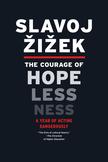
Slavoj Zizek starts The Courage of Hopelessness with the premise that in today’s globalized world, capitalism determines “all conditions of life.” This “introduces a radical class division across the entire globe” that separates “those protected by the sphere from those outside its cover.” In other words, he sees the inner world of capitalism as a sort of “cupola,” where only a wealthy minority gets to profit. “The latest Paris terrorist attacks, as well as the flow of refugees,” Zizek writes, “are momentary reminders of the violent world outside our cupola, a world which, for us insiders, appears mostly on TV reports about distant violent countries.”
The Courage Of Hopelessnessby Slavoj Žižek
Melville House. 320p $18.99
The author of over 40 books and the subject of numerous films, the 69-year-old Slovenian philosopher has been referred to as “the Elvis of cultural theory” for his use of philosophy to analyze popular culture. Though his books range from studies on Hegel to film theory and even theology, Zizek most often focuses on the way ideology functions in political discourses and in popular culture.
He has also been referred to as “the most dangerous philosopher in the West,” thanks in large part to provocative statements like “Gandhi was more violent than Hitler.” Zizek, of course, does not mean exactly what he says there. Rather, “Gandhi’s movement effectively endeavored to interrupt the basic functioning of the British colonial state.” The violence he refers to is that which challenges the overall political structure of a society. Statements like these also offer a glimpse into Zizek’s style: He attacks political liberals for being complicit in the way things are, while he is also opposed to right-wing politics.
Zizek argues that we should avoid the temptation of identity politics. Since capitalism excels at appropriating all kinds of cultures and identities for consumerist gains, politicizing particular non-Western cultures and identities will not prevent its negative expansion.
Zizek attained celebrity status in the English-speaking academic world with the publication of The Sublime Object of Ideology (1989). When this book was published, ideology tended to be understood as an all-encompassing political narrative. The failures of communist regimes seemed to inaugurate a world where people would be free from such projects. Yet at that time, Zizek argued that ideology would persist, though less as a matter of belief and more as the way people simply continued to act. Irony and cynicism, he argued, would became the dominant ideologies, enabling people to engage in a consumerist lifestyle while claiming to be fully aware of the problems it represents. Though people might claim not to commit to any specific system of ideas, their behavior would show otherwise.
In The Courage of Hopelessness, Zizek challenges the reader to act without relying on the false certainties of ready-made discourses. Global capitalism, he notes, is increasingly losing its link to Western democracy. Nondemocratic regimes like China’s have proven that they can function within the world of global capitalism. This economic system is capable of adapting to various political systems, and in so doing it puts at stake what Zizek refers to as “the commons.” This includes issues like ecology, immigration, access to information and health care. As common spaces of living and communication become more and more privatized, the question of who gets to have access to them creates more worldwide tensions. Increases in migration and reactions against it, like calls to “build that wall,” are some examples of these tensions.
In the face of this hopeless situation, Zizek argues that we should avoid the temptation of identity politics. Since capitalism excels at appropriating all kinds of cultures and identities for consumerist gains, politicizing particular non-Western cultures and identities will not prevent its negative expansion. Though identity politics may mobilize many on the left, for Zizek this happens in full conformity with the way neoliberalism capitalizes on different cultures. Since capitalism cashes in on a certain free market of identities, identity politics does not, then, offer any serious challenge to the current state of affairs.
To develop these points, Zizek analyzes the Syriza movement in Greece, Boko Haram in Nigeria and the Trump-Clinton election in the United States. For him, Donald Trump is the “symptom” of Hillary Clinton’s politics, which focused on issues of cultural and sexual identity. She succeeded in uniting “Wall Street and Occupy Wall Street,” and in this sense her message to her liberal supporters was: “we can concede all your cultural demands...without endangering the global market economy.” These improvements in cultural and identity recognition are positive achievements in Zizek’s view, but he says they betray a fear that many political liberals have of actual change. Identity politics becomes a way of promising generalized change while allowing the neoliberal economic system to remain the same.
Zizek also argues that the excessive fear of Trump among liberals hinders real engagement with him and his ideas. Political satires on television play on these feelings of shock and indignation to instill a false sense of solidarity. In short, they make Trump’s opponents feel smart and good about themselves. But this goes without committing to any collective action that goes beyond the demands for more recognition.
For Zizek, Trump is in a certain sense not all that dangerous. People like Ted Cruz are much more dangerous and extreme in their positions, because they are more fanatical in their ideology. Compared with them, Trump appears much more to be a cynic and an opportunist. Zizek sees Trump as “an attempt to keep together the two heterogeneous components of the Republican Party—big business and populism.”
For Zizek, Trump and Clinton are “both worse.” He argues that the political left cannot limit itself to fighting Trump. Rather, it should continue to align itself with people like Sen. Bernie Sanders, who dared to question the economic policies of Hillary Clinton. If all the left has to offer is a critique of Trump without a critique of Clinton, then Trump is just the beginning of more politicians like him to come.
Zizek also explores how multiculturalist liberalism is facing a crisis of conflicting values that it itself cannot resolve. Fundamentalist and terrorist groups make this deadlock more explicit when they see themselves as rebelling against the Western imposition of customs. Groups in the United States and Western Europe arguing against Western colonialism tend to be in favor of women’s rights. Yet groups like Boko Haram frame their opposition to women’s rights in anti-colonialist terms. For Zizek, “anti-colonialist critiques of the West more and more appear as a rejection of Western ‘sexual’ confusion, and as a demand for a return to the traditional sexual hierarchy.”
Slavoj Zizek: “One tends to denounce Western cultural values at the very moment that, critically reinterpreted, many of them can serve as a weapon against capitalist globalization.”
This book suffers from some of the common failings of Zizek’s other writings. He covers a wide variety of issues but does not always succeed in connecting them. Readers may also find it frustrating that Zizek has very little to offer in terms of concrete proposals. Yet he suggests that we first ask the right questions about our current situation and reject temptations to rash activism. He also suggests that we not shy away from looking at Western cultural values in new and different ways. “[O]ne tends to denounce Western cultural values at the very moment that, critically reinterpreted, many of them can serve as a weapon against capitalist globalization.”
Writ large, this book is an extended argument that a hopeless situation can be a fertile ground for acts of courage, provided one dares to think outside of the usual right-wing/left-wing labels.

March 31, 2018

The Israel Massacre Forces by Gideon Levy, Apr 01, 2018, Haaretz

Opinion 

The Israel Massacre Forces

The shooting on the Gaza border shows once again that the killing of Palestinians is accepted in Israel more lightly than the killing of mosquitoes

Featured Story

Dejemos que la izquierda de Estados Unidos tenga cuidado! por Andrew Taylor 23.06.2021

La Administración Biden ha habilitado una nueva "Iniciativa contra el terrorismo doméstico" para defender "The Homeland"...