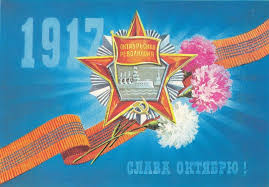
November 26, 2016

[Video} Cuba: An African Odyssey Parts 1 & 2


This revealing, award-winning documentary adds to our understanding of the Cold War through its least-known context: Africa.

From 1961 to 1991, Africa was a battleground for four different competing interests. The Soviet Union wanted to extend its influence into a new continent; the U.S. lusted after Africa's natural resources; former European empires felt their grip on the area weaken; and, newly formed African nations fought to defend their recently won independence. When the latter called on Cuban guerrillas to aid them in their struggle, Castro and Cuba stepped in to build a new offensive strategy, which would have long-lasting influence on developing countries in their battles against colonialism.

From Che Guevara's efforts in the Congo to the triumphant battle at Cuito Cuanavale, the documentary tells the story of those internationalists who won their battles but ultimately lost the war. 

Director Jihan El Tahri

Released 2007

Fidel Castro And The Cuban Role In Defeating Apartheid February 26, 2015

Fidel Castro And The Cuban Role In Defeating Apartheid
February 26, 2015 by Matt Peppe


In this black and white photo, Nelson Mandela holds up a fist while embracing Fidel Castro with an arm around his shoulder during the celebration of the “Day of the Revolution” in Matanzas Saturday, July 27, 1991. Cuba’s intervention was critical to allowing South Africa to overthrow the racist apartheid regime.


Until the fall of the Portuguese dictatorship in 1974, apartheid in South Africa was secure. There was no substantial resistance anywhere in southern Africa. Pretoria’s neighbors comprised a buffer zone that protected the racist regime: Namibia, their immediate neighbor which they had occupied for 60 years; white-ruled Rhodesia; and the Portuguese-ruled colonies of Angola and Mozambique. The rebels who fought against minority rule in each of these countries, operating without any safe haven to organize and train, were powerless to challenge the status quo.
South Africa’s buffer would have remained intact for the foreseeable future, solidifying apartheid and preventing any significant opposition, but for one man: Fidel Castro.
In October of 1975, South Africa invaded Angola at the behest of the U.S. government to overthrow the left-wing Popular Movement for the Liberation of Angola (MPLA) in the soon-to-be independent country. Without Cuban assistance, the apartheid army would have easily cruised into Luanda, crushed the MPLA, and installed a puppet government friendly to the apartheid regime.
Cuba’s intervention in Angola managed to change the course of that country and reverberate throughout Africa. By ensuring independence from the white supremacists, Angola was able to preserve its own revolution and maintain its role as a base for armed resistance groups fighting for liberation in nearby countries.

In the American version of Cold War history, Cuba was carrying out aggression and acting as proxies of the Soviet Union. Were it not for one persistent and meticulous scholar, we might never have known that these are nothing more than dishonest fabrications. In his monumental books “Conflicting Missions” and “Visions of Freedom,” historian Piero Gleijeses uses thousands of documents from Cuban military archives, as well as U.S. and South African archives, to recount a dramatic, historical confrontation between tiny Cuba and Washington and its ally apartheid South Africa. Gleijeses is the only foreign scholar to have gained access to the closed Cuban archives. He obtained thousands of pages of documents, and made them available to the Wilson Center Digital Archive, which has posted the invaluable collection online.

Gleijeses’s research made possible a look behind the curtain at one of the most remarkable acts of internationalism of the century.
“Internationalism — the duty to help others — was at the core of the Cuban revolution,” Gleijeses writes. “For Castro’s followers, and they were legion, this was not rhetoric … By 1975, approximately 1,000 Cuban aid workers had gone to a dozen African countries, South Yemen, and North Vietnam. In 1976-77, technical assistance was extended to Jamaica and Guyana in the Western Hemisphere; to Angola, Mozambique, and Ethiopia in Africa; and to Laos in Asia. The CIA noted: ‘The Cuban technicians are primarily involved in rural development and educational and public health projects – areas in which Cuba has accumulated expertise and has experienced success at home.’” [1]
The fight against apartheid, for the liberation of people who suffered for centuries under colonialism and racial subjugation, was truly a David versus Goliath conflict. In addition to having a strong military itself and being armed with nuclear weapons, South Africa enjoyed the diplomatic support of the United States, the world’s largest superpower. In this context, Cuba’s intervention – a poor Caribbean island under relentless attack from an unrivaled hegemon against a racist juggernaut backed by the world’s leading imperial powers — is even more remarkable.
Explaining how the significance of Cuba’s role in Angola is “without precedent,” Gleijeses writes: “No other Third World country has projected its military power beyond its immediate neighborhood.”
He notes that while the Soviet Union later sent aid and weapons, they never would have become involved unless Castro had taken the lead (which he did in spite of Russian opposition):
“The engine was Cuba. It was the Cubans who pushed the Soviets to help Angola. It was they who stood guard in Angola for many long years, thousands of miles from home, to prevent the South Africans from overthrowing the MPLA government.” [2]

White elitism has suffered an irreversible blow

It had become clear that the left-wing People’s Movement for the Liberation of Angola (MPLA), the largest and most widely-supported of three warring groups, would prevail and gain control of the country. Afraid of having a government staunchly opposed to white domination so close to home, South Africa rushed to prevent self-determination for the Angolans. They were aided by U.S. Secretary of State Henry Kissinger, who believed the threat of black liberation in Africa, which would lead to local control of their own resources at the expense of foreign investors, could still be contained.

South Africa launched an invasion to topple the MPLA and install the guerilla Jonas Savimbi, leader of the National Union for the Total Independence of Angola (UNITA), the smallest and least popular of the three groups, as a puppet dictator in Angola. Savimbi, a collaborator with the Portuguese dictatorship before Angolan independence, was known for his ruthlessness, terrorism, and hunger for power. An avowed anti-communist who had already aligned with South Africa, Savimbi would have made the perfect Angolan facade for apartheid control.
Agostinho Neto, the President of Angola, appealed to Cuba to send troops to ward off the apartheid army’s invasion. On November 4, Castro agreed. Several days later the first Cuban special forces troops boarded planes for Angola, where they would launch Operation Carlota.

As the South African troops advanced inside Angola, they made remarkably easy gains through scarcely defended villages that put up little – if any – resistance. But by November 9, Cuban Special Forces had arrived and went immediately to the battlefield. In the Battle of Quifangondo, the Angolans, supported by Cuban troops, made a decisive stand. They turned back the apartheid army and prevented their easy march to Luanda, where that same day the Portuguese military left Angola and Neto declared independence.
Throughout November, the Cubans prevented further South African advances towards the Angolan capital. On November 25, the Cuban troops laid a trap for the racist army in the Battle of Ebo. As the South African Defence Force (SADF) tried to cross a bridge, Cubans hidden along the banks of the river attacked. They destroyed seven armored cars and killed upwards of 90 enemy soldiers.
Cuban troops kept pouring into Angola throughout the rest of the year. As many as 4,000 had arrived by the end of 1975, roughly the same number as South African invaders. Unable to penetrate deeper into Angolan territory, and facing a barrage of negative criticism after international media discovered SADF troops, rather than mercenaries, were behind the invasion, the South African advance ended.
The impact of the Cuban victory resonated far beyond the battlefield. More important than the strategic gain, the victory of black Cuban and Angolan troops against the whites of the South African racist army shattered the illusion of white invincibility.
A South African military analyst described the meaning of his country’s defeat: “The reality is that they have won, are winning, and are not White; and that psychological edge, that advantage the White man has enjoyed and exploited over 300 years of colonialism and empire, is slipping away. White elitism has suffered an irreversible blow in Angola, and Whites who have been there know it.” [3]

American officials claimed that the Soviets masterminded the operation with Cubans acting as their proxies. They couldn’t fathom Castro acting on its own, rather than as Moscow’s puppet. Such claims were repeated for years. American politicians went as far as falsely accusing Cuban troops of being mercenaries. But the record makes clear that these were in reality nothing more than slanderous lies.

The Americans were furious. “Kissinger’s response to Castro’s intervention was to throw mercenaries and weapons at the problem,” Gleijeses writes. [4]
The Secretary of State was afraid that after their successful intervention in Angola, Cuba would put the rest of the racist regimes in the region in jeopardy:
“We can’t say Rhodesia is not a danger because it is a bad case. If the Cubans are involved there, Namibia is next and after that South Africa, itself … If the Cubans move, I recommend we act vigorously. We can’t permit another move without suffering a great loss.” [5]


Fidel Castro speaks at a microphone in Havana, 1978. Castro said resisting South African apartheid united the world and was “the most beautiful cause.” (Wikimedia / Marcelo Montecino)


Support and solidarity with revolutionary movements

Though South Africa had lost the battle, it by no means had surrendered the war. The apartheid regime still had designs on toppling the Angolan revolution and using it for its own ends.
“It would be the centerpiece of the Constellation of Southern African States that they sought to create,” writes Gleijeses. “The concept had first emerged under Prime Minister Vorster, but it was PW Botha who had given it ‘a substance previously lacking.’ The constellation, the generals hoped, would stretch beyond South Africa, its Bantustans, Lesotho, Malawi, Botswana, and Swaziland, to embrace Angola, Mozambique, Zimbabwe, Zambia, Zaire, and a nominally independent Namibia. The black members of the constellation would be anticommunist, tolerant of apartheid, and eager to persecute the ANC (the African National Congress in South Africa) and SWAPO (the South West Africa People’s Organization in Namibia).” [6]
Cuba was aware of this.

“In Southern Africa Angola today, more so than a year ago, is the bastion of the fight against the racists and the unquestionable revolutionary vanguard. Imperialism knows this,” wrote Jorge Risquet, head of the Cuban Civilian Mission in Angola to President Neto. “Imperialism has to know what Angola does for Zimbabwe, what Angola does for Namibia, what Angola does for South Africa. Angola, bravely, lends real support to the movements of Namibia, Zimbabwe, South Africa. In concrete terms, nothing less than training in its territory 20,000 combatants from those three countries oppressed by the racists.” [7]

With the omnipresent threat against Angola, Cuba maintained a large contingent of around 30,000 troops at the behest of the MPLA to prevent another invasion. In a letter to the political bureau of the MPLA after Neto’s death, Fidel wrote of the sacrifice Cuba was willing to make.
“Cuba cannot keep indefinitely carrying out a military cooperation effort of the magnitude it currently is in Angola, which limits our possibilities of support and solidarity with the revolutionary movement in other parts of the world and defense of our own country,” Fidel wrote.
But he made clear that Cuba had no plans to abandon Angola:
“I want to assure you, above all, that in these bitter and difficult circumstances, Cuba will be unconditionally at your side.” [8]

Meanwhile, South African aggression was relentless. In 1983, the SADF bombed Angolan towns and pushed nearly 90 miles into Angolan territory. When the UN moved to condemn the invasion, the United States made sure the censure would not include sanctions, as they had done for more than a decade.
The apartheid regime used Washington’s diplomatic shield to keep its dreams of a Constellation of Southern African States alive. The International Court of Justice had decisively rejected the continued presence of South Africa in Namibia in a 1971 Advisory Opinion as “illegal.”
The court declared that “South Africa is under obligation to withdraw its administration from Namibia immediately and thus put an end to its occupation of the territory.”

Seven years later, the UN Security Council passed Resolution 435 reiterating its objective of “the withdrawal of South Africa’s illegal administration from Namibia and the transfer of power to the people of Namibia.”
Washington’s support enabled South Africa to ignore the ICJ and UN Security Council. The apartheid government, understanding that free elections would mean a SWAPO victory, refused to comply. “The South Africans took advantage of U.S. goodwill to further their foreign policy aims,” Gleijeses writes. [9]
In 1978, a South African massacre against a refugee camp in Cassinga killed more than 600 Namibians. The U.S. opposed sanctions in the Security Council.
President Carter took the excuses of the apartheid regime at face value: “They’ve claimed to have withdrawn and have not left any South African troops in Angola. So we hope it’s just a transient strike in retaliation, and we hope it’s all over.”
Even after Angolans foiled an attack by South African commandos against Gulf Oil pipelines inside Angola in 1985, which would have killed U.S. citizens, the U.S. government continued protecting their racist allies.

The whole world is against apartheid

As international opinion turned, Castro sensed that apartheid in South Africa would not be able to last much longer. Despite the growing cost to Cuba of maintaining about 30,000 troops in Angola, Castro was confident that he would be able to wait out the inevitable downfall of the racist regime.
“Today they are totally on the defensive in the political arena, in the international arena, they have a very serious economic crisis,” Castro said in a conversation with Angolan President José Eduardo Dos Santos in 1985. “I can’t say how this is going to end, what the end result of it all will be; but in my opinion, South Africa won’t recover from this crisis.”
Castro said that the situation facing South Africa did not occur by chance, but that it was a result of the collective action of the people in many parts of Southern Africa fighting for their independence.
“All these factors, common struggles, common sacrifices, have contributed to create this crisis for apartheid, that wasn’t created in one day, it was created over many years,” Castro said. [10]
“I believe that apartheid – I sincerely believe it – is mortally wounded,” Castro said. [11]

Nevertheless, the apartheid government kept up its relentless fight for survival. Throughout the 1980s, Angola was subjected to various incursions and invasions by South Africa. At the same time, the Angolan Armed Forces (FAPLA) fought against former Portuguese collaborator Jonas Savimbi and his UNITA army, who was backed by South Africa and the United States. Savimbi sought to roll back MPLA rule and form an alliance with the apartheid regime.
The confrontations climaxed in the Battle of Cuito Cuanavale in late 1987. After a forward offensive to attack, UNITA stalled. Angolan and Cuban troops managed to defend the town. They then turned to the Southwest where they attempted to drive the SADF out of the country once and for all. As the Cubans asserted supremacy with their air force, they were able to take the lead on the battlefield.

With the military confrontation raging, talks started between Angola, Cuba and South Africa, with the United States moderating, in London in early 1988. In instructions to the Cuban delegation, Castro reflected on the South Africans and American mindset.
“The fact they have accepted this meeting in London at such a high level shows that they are looking for a way out because they have seen our advance and are saying, ‘How is it that Cuba has converted itself into the liquidator of Apartheid and the liberator of Africa?’ That’s what is worrying the Americans, they’re going to say: ‘They’re going to defeat South Africa!” Castro said. [12]
Castro also told his delegation that the goal was not to pursue a war or military victory, but to achieve negotiations over SADF withdrawal from Angola and implementation of Resolution 435, which would grant independence to Namibia.
“They should know that we are not playing games, that our position is serious and that our objective is peace,” he said. [13]

The Cuban Commander-in-Chief’s instructions to his negotiating team show that he fully understood that Cuba stood firmly on the right side of history.
“All of Africa is in favor, all of the non-aligned movement, all the United Nations, the whole world is against Apartheid,” Castro said. “This is the most beautiful cause.” [14]

The negotiations would continue throughout the year and lead to the New York agreements in December 1988, which Gleijeses says “led to the independence of Namibia and the withdrawal of the Cuban troops from Angola.” [15]
This was the beginning of the end of apartheid.
“By the time Namibia became independent, in March 1990, apartheid was in its death throes,” Gleijeses writes. “A month earlier, Frederick de Klerk, who had replaced the ailing PW Botha as South Africa’s president, legalized the ANC and the South African Communist Party, and he freed Nelson Mandela. The apartheid government engaged in protracted and difficult negotiations that led in April 1994 to the first elections in the country’s history based on universal franchise.” [16]


The ruins of Angola’s Lobito Lighthouse, photographed in 1995, still bear the portrait of Fidel Castro. Castro sent as many as 30,000 troops to Angola in order to defeat an invasion from South Africa bent on propping up their racist regime and expanding it throughout the southern part of the continent. (Wikimedia / Farol Do Lobito)


The contribution of the Cuban Internationalists

No one was more grateful for Cuba’s role in the defeat of apartheid and the liberation of blacks in Africa than Nelson Mandela. In July 1991, during a visit to Cuba to mark the 38th anniversary of the Cuban revolution, Mandela spoke of his gratitude for the Cuban role in Southern Africa.
“The Cuban people hold a special place in the hearts of the people of Africa. The Cuban internationalists have made a contribution to African independence, freedom and justice, unparalleled for its principled and selfless character,” Mandela said. “We in Africa are used to being victims of countries wanting to carve up our territory or subvert our sovereignty. It is unparalleled in African history to have another people rise to the defence of one of us.”

Many years later, after the passing of Nelson Mandela, Castro would wonder why after so many years the enablers of apartheid still could not admit the truth.
“Why try to hide the fact that the apartheid regime, which made the people of Africa suffer so much and incensed the vast majority of all the nations in the world,” Castro wrote, “was the fruit of European colonialism and was converted into a nuclear power by the United States and Israel, which Cuba, a country who supported the Portuguese colonies in Africa that fought for their independence, condemned openly?”

Since the success of the Cuban revolution of 1959, American policy has always been reflexive opposition to anything Cuba did. Shortly after Mandela’s funeral, Gleijeses wrote an open letter to President Obama that described the actual course of events in Africa during the Cold War:
“While Cubans were fighting for the liberation of the people of South Africa, successive American governments did everything they could to stop them.”
Gleijeses wrote that Obama must have noticed the reception of Cuban President Raúl Castro in South Africa, and implored him to reconsider the disconnect between the two countries. “Perhaps, Mr. President, what you saw in South Africa may inspire you to bridge the chasm and understand that in the quarrel between Cuba and the United States the United States is not the victim,” he wrote.
But Obama has not been able to learn this lesson. On December 17, when he announced a change in the U.S.’s Cuban policy, Obama claimed that the current policy “has been rooted in the best of intentions.”
This is a gross misrepresentation that suppresses the policy of unrelenting economic war, which has caused unimaginable pain and suffering to millions of Cubans; a covert terrorist campaign against the island carried out first directly by the U.S. government then later sanctioned and outsourced to reactionary terrorists provided safe haven in the United States; and collaboration with the apartheid regime to punish Cuba for helping fight for the liberation of black Africa.

American officials would, no doubt, prefer that Cuba’s heroic role in defeating apartheid and the U.S.’s shameful role in enabling it be relegated to the ash heap of history. But the historical and documentary record speaks for itself, despite Washington’s attempts to bury it.
Like Castro, one has to wonder: why keep hiding the truth?

Works cited
[1] Gleijeses, Piero. Visions of Freedom: Havana, Washington, Pretoria, and the Struggle for Southern Africa, 1976-1991. The University of North Carolina Press, 2013. http://www.amazon.com/Visions-Freedom-Washington-Pretoria-1976-1991-ebook/dp/B00GJQHOJ4/ref=sr_1_1?ie=UTF8&qid=1420320673&sr=8-1&keywords=visions+of+freedom
[2] Ibid.
[3] as cited in Gleijeses, 2013
[4] Gleijeses, Piero. Conflicting Missions: Havana, Washington, and Africa, 1959-1976 (Envisioning Cuba). The University of North Carolina Press, 2002.http://www.amazon.com/Conflicting-Missions-Washington-1959-1976-Envisioning-ebook/dp/B004P1JTGG/ref=sr_1_1_twi_2?ie=UTF8&qid=1423430995&sr=8-1&keywords=conflicting+missions
[5] “NSC Meeting, 4/7/1976” of the National Security Adviser’s NSC Meeting File at the Gerald R. Ford Presidential Library. (pg. 21)http://www.fordlibrarymuseum.gov/library/document/0312/1552402.pdf
[6] Gleijeses, 2013
[7] Jorge Risquet to Agostinho Neto,” February, 1978, History and Public Policy Program Digital Archive, Archives of the Central Committee of the Cuban Communist Party. Obtained and contributed to CWIHP by Piero Gleijeses and included in CWIHP e-Dossier No. 44.http://digitalarchive.wilsoncenter.org/document/117933 (pg. 8-9)
[8] “Fidel Castro to Political Bureau of the MPLA,” September 15, 1979, History and Public Policy Program Digital Archive, Archive of the Cuban Armed Forces. Obtained and contributed to CWIHP by Piero Gleijeses and included in CWIHP e-Dossier No. 44.http://digitalarchive.wilsoncenter.org/document/117946 (pg. 2-3)
[9] Gleijeses, 2013
[10] Memorandum of Conversation between Fidel Castro and José Eduardo dos Santos,” October 25, 1985, History and Public Policy Program Digital Archive, Archives of the Central Committee of the Cuban Communist Party. Obtained and contributed to CWIHP by Piero Gleijeses and included in CWIHP e-Dossier No. 44.http://digitalarchive.wilsoncenter.org/document/118021 (pg. 31-33)
[11] Ibid. (pg. 32)
[12] Instructions to the Cuban Delegation for the London Meeting, ‘Indicaciones concretas del Comandante en Jefe que guiarán la actuación de la delegación cubana a las conversaciones de Luanda y las negociaciones de Londres (22-4-88)’
[13] Ibid. (pg. 13)
[14] Instructions to the Cuban Delegation for the London Meeting, ‘Indicaciones concretas del Comandante en Jefe que guiarán la actuación de la delegación cubana a las conversaciones de Luanda y las negociaciones de Londres (23-4-88)’,” April 23, 1988, History and Public Policy Program Digital Archive, Archive of the Cuban Armed Forces. Obtained and contributed to CWIHP by Piero Gleijeses and included in CWIHP e-Dossier No. 44.http://digitalarchive.wilsoncenter.org/document/118134(pg. 5)
[15] Gleijeses, 2013

[16] Gleijeses, 2013

Farewell address of Commandante Fidel Castro April 19, 2016


"It constitutes a superhuman effort to lead any people in times of crisis. Without them, the changes would be impossible. In a meeting such as this, which brings together more than a thousand representatives chosen by the revolutionary people themselves, who delegated their authority to them, for all it represents the greatest honor they have received in their lives -- to which is added the privilege of being a revolutionary, which is the product of our own consciousness.
Why did I become a socialist? Or more plainly, why did I become a communist? That word that expresses the most distorted and maligned concept in history, by those who have the privilege of exploiting the poor, dispossessed ever since they were deprived of all the material wealth that work, talent and human energy provide. Since when does man live in this dilemma? Throughout time without limit. I know you do not need this explanation but perhaps some listeners do.
I speak simply so it is better understood that I am not ignorant, extremist, or blind, nor did I acquire my ideology of my own accord studying economics. I did not have a tutor when I was a law and political sciences student, subjects in which they have a great influence. Of course then I was around 20 years old and was fond of sports and mountain climbing. Without a tutor to help me in the study of Marxism-Leninism, I was no more than a theorist, and of course, had total confidence in the Soviet Union. Lenin's work outraged after 70 years of Revolution. What a history lesson! It can be affirmed that it should not take another 70 years before another event like the Russian Revolution occurs, in order that humanity have another example of a magnificent social revolution that marked a huge step in the struggle against colonialism and its inseparable companion, imperialism.
Perhaps, however, the greatest danger hanging over the earth today derives from the destructive power of modern weaponry which could undermine the peace of the planet and make human life on earth’s surface impossible.
The species would disappear like the dinosaurs disappeared, perhaps there will be time for new forms of intelligent life or maybe the sun’s heat will grow until it melts all the planets of the solar system and its satellites, as a large number of scientists recognize. If the theories of several of them are true, which we laypeople are not unaware of, the practical man must learn more and adapt to reality. If the species survives a much longer space of time the future generations will know much more than we do, but first they will have to solve a huge problem. How to feed the billions of human beings whose realities are inevitably at odds with the limited drinking water and natural resources they need?
Some or perhaps many of you are wondering where are the politics in this speech. Believe me I am sad to say it, but the politics are here in these moderate words. If only numerous human beings would concern ourselves with these realities and not continue as in the times of Adam and Eve eating forbidden apples. Who will feed the thirsty people of Africa with no technology at their disposal, no rain, no reservoirs, no more underground aquifers than those covered by sands? We will see what is said by the governments which almost all signed the climate commitments.
We must constantly hammer away at these issues and I do not want to elaborate beyond the essentials.
I shall soon turn 90. Such an idea would never have occurred to me and it was never the result of an effort, it was sheer chance. I will soon be like everyone else. We all reach our turn, but the ideas of the Cuban communists will remain as proof that on this planet, working with fervor and dignity, can produce the material and cultural wealth that humans need, and we must fight relentlessly to obtain these. To our brothers in Latin America, and the world, we must convey that the Cuban people will overcome.
This may be one of the last times that I speak in this room. I voted for all the candidates submitted for election by Congress and I appreciate the invitation and the honor of your listening to me. I congratulate you all, and firstly, compañero Raúl Castro for his magnificent effort.
We will set forth on the march forward and we will perfect what we should perfect, with the utmost loyalty and united force, just as Martí, Maceo and Gómez, in an unstoppable march."
----
Delivered at the closing session of the 7th Congress of the Communist Party of Cuba
April 19, 2016
55 years and one day after the Cuban people repelled U.S. invasion at the Bay of Pigs

November 25, 2016

Germany-Led Coalition To Push For New Arms Control Deal With Russia Nov 25, 2016


Germany-Led Coalition To Push For New Arms Control Deal With Russia


Mary Pascaline
November 25, 2016

“Europe’s security is in danger,” German Foreign Minister Frank-Walter Steinmeier said. “As difficult as ties to Russia may currently be, we need more dialogue, not less.” More A senior German official said 16 European countries, led by Germany, joined forces to push for a new arms control agreement with Russia, hoping to prevent an arms race in Europe after heightened tensions over Moscow's annexation of Crimea and Russian aggression in Ukraine.
“Europe’s security is in danger,” German Foreign Minister Frank-Walter Steinmeier told Die Welt newspaper in an interview published Friday. “As difficult as ties to Russia may currently be, we need more dialogue, not less.”

All 16 countries — Austria, Belgium, Bulgaria, the Czech Republic, Finland, France, Germany, Italy, the Netherlands, Norway, Portugal, Romania, Slovakia, Spain, Sweden and Switzerland — belong to the Organization for Security and Cooperation in Europe (OSCE) and have joined Steinmeier’s initiative to develop a new arms control deal with Russia, an idea he first brought up in August. The group will issue a joint statement later Friday and meet again on the sidelines of the ministerial level OSCE meeting in Hamburg, hosted by the current head of the organization, Germany.

Steinmeier — a Social Democrat, has been nominated to become the president of Germany next year — condemned Russia’s support for separatists in eastern Ukraine and its annexation of Crimea, saying Russian aggression undermined the trust built over decades in Europe and also threatened to start a new arms race. He called for more countries to join his initiative.
“We have a responsibility to leave no stone unturned in our effort to increase security and peace,” he said.

The U.S. expressed skepticism over the initiative, pointing out that Russia failed to abide by existing treaties and agreements.

A top Ukrainian official said last week less U.S. support to the country could result in further destabilization of the region and could trigger worse consequences for other parts of the world.

“This equilibrium, if it is ruined, then it could actually lead to drastic consequences in other parts of the world,” Ivanna Klympush-Tsintsadze, deputy prime minister for European and Euro-Atlantic integration of Ukraine, said.

From the Archives 25 February 2012 : Henry Winston, American Communist -- A Man of and for the People --

From the Archives 25 February 2012 : Henry Winston -- A Man of and for the People -- 

Biographical Notes 
Prepared by the Henry Winston Centenary Tribute Committee Executive
Jarvis Tyner, Danny Rubin, Mary Arnold, Tina Nannarone


Henry Winston:
Man of the People & for the People


Biographical Notes

The remarkable and heroic life of Henry Winston began in Hattiesburg, Mississippi in 1911, in the heart of the Jim Crow South at the height of its repressive character. His father, Joseph, worked in a small unorganized saw mill at very low wages. His mother, Lucille, did domestic work as she could, while bringing up six children, the second of whom was
Henry. Henry Winston's grandparents had all been slaves.
Young Henry went to a Jim Crow elementary school. Just after World War I, the family moved up the Mississippi River to Kansas City, Mo., in search of better living conditions.Winston completed his formal education in a Jim Crow Junior High School. Henry Winston then had to go to work, which consisted of temporary pick-up jobs to help the family
survive. In these early years Henry was a good student and an avid reader of good literature and of anything he could find dealing with social conditions. He was also a good athlete.
The Crash of 1929 and the Great Depression hit Kansas City and the Winston family hard. No one in the family was able to keep a steady job. As all over the country, in Kansas City an unemployed council was being built on the initiative of the Communist Party and the Young Communist League(YCL). Henry Winston joined the Council and participated in
its demonstrations and other activities, including a nation-wide demonstration in cities all over the country on March 6, 1930. This was a demonstration participated in by 1 million people, including 100,000 in New York. It was led by the Communist Leader, Carl Winter, who later was to become a co-worker of Winston's in the national leadership of the Communist Party.

In March of 1931 the arrest of the 9 Scottsboro, Ala. Youth took place on framed up charges of rape of two white women. Henry soon became involved in the defense committee in Kansas City which was part of a national defense campaign led by Communists Joseph Brodsky, their attorney, and William L. Patterson, the head of the International Labor Defense (ILD) At this time two most important events took place which were to shape the rest of Henry Winston's life. In the Unemployed Council, he met members of the YCL with whom he became friends, received materials that he read avidly, went to meetings, became a member and not long after a leader of the Kansas City YCL. At the same time he met Fern Pierce, the love of his life. She grew up on a poor tenant farm in Oklahoma. She also moved to Kansas City to find a better life, became involved in the activities of the Unemployed Council, the Scottsboro Defense and then the YCL.

Henry Winston possessed notable abilities to analyze, theorize and organize and to work with people. This was recognized and as a result he was invited to New York to attend a national school of the YCL. At that time such schools lasted for two or three months. Fern Winston was similarly recognized for her evident capacity and was invited at the same time to the YCL national school. The result of the school was not only a grasp of Marxism but conviction of the need for the YCL and the Communist Party and a lifetime commitment to the movement. But it also permitted the blossoming of the relationship between Henry and Fern that led to their marriage in 1933 and the birth of a son in 1934 It was not long after this that the family traveled to the Soviet Union for the first time. What they saw there confirmed their commitment to socialism as the necessary alternative to capitalism and they were especially impressed with the treatment of the formerly nationally oppressed peoples. Winston maintained a firm confidence for the rest of his life that the Soviet Union would overcome all difficulties and mistakes and would continue to make major contributions to the progressive forces of the world.

Henry and Fern Winston moved to New York and both became active in the YCL leadership there, with activity centering on unemployment and the Scottsboro case. They participated in the Hunger Marches to Washington, DC at the end of 1932.  Henry Winston soon moved up into the national leadership of the YCL through several posts including National Organizational Secretary (1936) and then National Secretary, when Gil Green left that post to assume major duties in the Communist Party. In this period the YCL was growing rapidly and had become an important force in the country. It helped build and lead the American Youth Congress(AYC), that had all the democratic-minded youth organizations among its three million members. The YCL and the AYC fought for jobs, for a national youth act and Administration. The latter was won by Executive Order of Franklin Delano Roosevelt. The WPA and the CCC provided important job and recreation and cultural programs for youth. The YCL led the way in resisting the attempts of fascism to win a foothold in our country, especially among the youth. It led the solidarity effort with the Spanish Republic against the attempt of German and Italian fascism in support of Franco to take over Spain. Of the 3000 volunteers who went to fight as part of the Lincoln Brigade more than half were YCL and/or Communist Party members. Half of the volunteers did not return. Winston was particularly active in the solidarity with Spain effort not only during the years of the Civil War but for the rest of his life.
Not only was the YCL very active in building the unemployed Councils, it played a major role in supplying organizers to John L Lewis, Philip Murray and the other Congress of Industrial Organization(CIO) leaders in building the mass production industrial unions. Henry Winston played a leading role in this effort. Another area of Winston's concern as a national leader of the YCL was the building of the Southern Negro Youth Congress(SNYC)
from 1937-1946. At its height it involved 100,000 Southern youth, primarily African Americans. Among its leaders were YCLers Ed and Augusta Strong, Esther Cooper and James E. Jackson, Louis and Dorothy Burnham and Grace Bassett. Whenever they needed help they reached Henry Winston and help was forthcoming. This also began a lifetime
close friendship between the Winstons and the Jacksons.

Among the leaders of the YCL, co-workers of Winston who fought in Spain, were BobThompson, who was a Captain in Spain, Carl Ross, Steve Nelson, Joe Brandt. While in the National Leadership of the YCL, Henry Winston worked closely with Gil Green, Betty Gannett, Claudia Jones, Bob Thompson, and Carl Ross. Henry Winston as well as all these other YCL leaders gradually moved on from YCL leadership to Communist Party leadership. In 1939, Henry Winston attended a national school of the Communist Party and began to move on into national party leadership. Soon the US entered the war against fascism after the attack on Pearl Harbor. Henry Winston was always a believer in leadership by example and he never asked anyone else to do anything he was not prepared to do. With the agreement of the Party leadership collective, he and other national leaders such as Bob Thompson volunteered to fight fascism, while others were drafted a few days after the start of the war. It is estimated that at least 15,000 members of the YCL and/or the Communist Party fought in World War II.

The military did not have a uniform policy with respect to the YCL and Communist Party members in the military. Some were sent to the most dangerous fronts, Guadalcanal and the South Pacific, Omaha Beach and the opening up of the second front in France. Many others were kept out of the fighting and away from the soldiers so they would not "infect"
them with radical ideas. Henry Winston was in this second category and spent the war in Britain. His friend and comrade, James Jackson, spent the war in Burma and others spent it at the end of the Aleutian Islands. Those who were permitted to fight the fascists acquitted themselves very well. Capt. Herman Boettcher won the Distinguished Service Cross
posthumously, fighting in the Philippines. Sgt. Bob Thompson also won the Distinguished Service Cross, while fighting in the South Pacific. Lou Diskin, a co-worker from the YCL, won two Bronze medals for bravery under fire and fought his way from Omaha Beach to the meeting with the Soviet Army at the Elbe River and received a battlefield commission.
When Winston returned from the army to the Party leadership, he found a difficult situation of internal differences and fighting. He had followed these events while still in the army. 

On the one hand he appreciated the effort of the Party to pay more attention to the democratic history of the U.S. its anti-colonial history, the history of the labor movement, of the struggle against slavery and against imperialism. its culture and traditions. He opposed Earl Browder's American exceptionalism, that discounted the danger of a postwar anti-Soviet campaign and repression of civil liberties at home and his steps toward dissolution of a Communist Party. He supported the full restoration of the Party at the 13th Emergency Convention, July 1945, at which Eugene Dennis was named General Secretary and Henry Winston was elected National Organizational Secretary. As National Organizational Secretary, Henry Winston was responsible for leading the effort to carry out the mass political policies of the Party and for building the Party. He was considered an expert on the theory and practice of organization of the Communist Party. The Party was known widely for its ability to get things done and to carry out its commitments. The period from the end of the war until the indictment of the 12 National Board members, including Henry Winston, in July 1948, were difficult years. US reaction resumed its efforts to reverse the New Deal, to weaken the labor movement to threaten a big increase in international tensions, including even atomic war with the Soviet Union, to hold back the national liberation movement and other progressive movements in the world, and to undermine democratic liberties in the US, and escalate racist violence. In Fulton, MO in 1947, Winston Churchill, together with President Harry Truman launched the Cold War. It was not long before there were headlines about Communists being spies for the Soviet Union and then the House Un-American Activities Committee attacking progressives and democrats in Hollywood. As we approached the1948 Presidential  Elections, the Progressive Party was launched with the candidacy of former Vice President Henry Wallace and Senator Glen Taylor(D, Idaho) as its candidates. The Communist Party supported this effort for a peace alternative. But on the eve of the Progressive Party founding Convention, the Truman Administration indicted the National Board of the Communist Party under the long dormant, thought control Smith Act legislation. This
threw a pall over the large progressive community in the country at that time and was one of the reasons for an election vote of 1 million for Wallace, instead of the 10 million once expected. The Smith Act indictment stimulated many additional forms of attack on not only the Communist Party but the entire progressive and much of the democratic community in the country. McCarthyism went into full swing.

The Smith Act indictment against Henry Winston, William Z. Foster, Benjamin J. Davis, Eugene Dennis, Bob Thompson, Gus Hall, Gil Green and the others and then against Elizabeth Gurley Flynn, Claudia Jones, Betty Gannett, James Jackson and over another hundred across the country, charged that they had conspired to teach and advocate the violent overthrow of the government. In other words they had no evidence that the Communists had done anything to overthrow the government by force and violence, nor that they had taught that the government should be so overthrown in the future. They were charged with conspiring that they were going to teach that the government should be thus overthrown. The only evidence was distorted interpretations of the classics of Marxism. Winston was one of the defendants who spoke in the court exposing the undemocratic nature of the trial and the whole assault on democratic rights.

It took a few years before court appeals including to the Supreme Court had been exhausted and the defendants were sentenced and ordered to surrender for their jail terms - 5 years for most. It had been agreed that four defendants would not surrender but would go underground and lead the Party from there, which meant complete separation from loved ones. The four were Gus Hall, Bob Thompson, Gil Green and Henry Winston. It was not long before Hall and Thompson were found by the authorities and imprisoned with 2 more years tacked on their sentences. In the case of Gil Green, based on collective decision, he walked in after four years and surrendered. The same took place with Henry Wisdom after 5 years. He then went to Terre Haute Penitentiary in Indiana to serve out a seven year sentence. Well into the sentence, Winston began having severe pain in the head, loss of control over balance and difficulty walking until he finally keeled over. At first the guards and the prison authorities did nothing for him. They treated him in a racist manner, as a malingering African American. When the prison authorities finally paid attention, Winston had lost all of his sight due to the growth of a non-malignant brain tumor. They had transferred him to a prison hospital on Staten Island considered a dungeon by the prisoners. John Abt, the general counsel for the Party, led the fight in courts to get him out of prison and out of the prison hospital without completely fulfilling his sentence. The mass fight domestically and internationally finally succeeded. Internationally his continued imprisonment became an embarrassment. Fidel Castro offered to trade all of the prisoners, from the Bay of Pigs aggression, for Henry Winston. Throughout the Soviet Union there were protest actions and constant news of the struggle. Finally, in 1961 President John F. Kennedy granted executive clemency. Upon his release and return from Soviet medical treatment, which could not reverse the blindness, Winston re-entered political life in the US.
At a press conference in July 1961, Winston said: "Despite my handicap, I intend to resume my part in the fight for an America and a world of peace and security, free of poverty, disease and race discrimination...I return from prison with the unshaken conviction that the people of our great land, Negro and white, need a Communist Party fighting for the  unity of the people for peace, democracy, security and socialism. I take my place in it again with deep pride. They robbed me of my sight but not of my vision." When Winston returned to political work with the leadership of the Communist Party, it had been 16 years since the start of the Smith Act trials in July 1948 And when he returned, the Party was still
under attack, this time under the McCarran Act. Most of the McCarran Act was declared unconstitutional in 1967.

Henry Winston was elected National Chair of the Party, confirmed by the 18th Convention in 1966 and from then until the end of his life shared leading the Party with Gus Hall, its General Secretary. To perform his duties, he had to have help walking around his offices and traveling. To continue his lifetime habit of wide reading, others had to read to him.
With assistance, he was able to write reports, articles, pamphlets and two major books, as well as keep up a substantial correspondence domestically and internationally. First and foremost in all this assistance was his wife, Fern Winston, who at the same time at first worked in a hospital and then worked for the Party as Chair of its Women's Equality
Commission and a member of the National Committee.

Henry Winston played a major role in the Party's work in relation to all the most significant struggles for peace and international solidarity, for jobs, equality and against racism, for democracy, progress and socialism, and for the building of the Party, the League and its press and media. He returned to activity during the last years of the Civil Rights Revolution
of the 60s and to the first serious efforts of an African American to win the Presidency in the candidacy of Jesse Jackson in 1984, which he welcomed. Among the struggles he was most involved in were the fight to get out of Vietnam and for nuclear disarmament. He also headed the effort within the party for the freedom of Angela Davis who the Reagan
Governorship in California was trying to imprison for life or even execute in a frame-up. Every day, the freedom of Angela Davis was the first thing on his agenda, working with Charlene Mitchell who headed the mass defense movement, with the attorneys for Angela Davis - Margaret Burnham and John Abt. The Party as a whole, as a result of Winston's
role was involved in this victorious struggle, which had become a major international effort and cause.
Henry Winston was also very centrally involved in the solidarity effort in the U.S. with the people of South Africa - The Communist Party of South Africa and African National Congress. This included close work with Oliver Tambo, the head of the ANC after Nelson Mandela was imprisoned, Moses Mobida, the General Secretary of the Communist Party of South Africa and with leaders of other liberation movements in Africa. At the same time, Henry Winston maintained ties with many prominent figures in the progressive community and in the African American community in particular. At his 70th birthday celebration in a major New York hotel, Ossie Davis was the Master-of-Ceremonies. Pete Seeger performed. Winston kept in touch with sections of the labor movement through such figures as Cleveland Robinson, the African American Secretary Treasurer of District 65, leaders of 1199.

In 1986, Winston returned to a Soviet Hospital with a recurrence of the brain tumor and they were unable to save his life. During this last period of his life, the Soviet Union was undergoing big reforms under the leadership of Gorbachev. According to CPUSA comrades who were in the hospital with Winston, following Soviet developments, Winston
welcomed the reform efforts and was hopeful they would succeed without causing any upheaval, while pointing a new way forward for socialism.

The many comrades who worked with Henry Winston, all marveled at his ability to give leadership on theoretical and political policy questions, as well as to be such a master of organization and getting things done. His absolute commitment to the interests of the working class - Black ,Brown, white, red, yellow - men, women, old , young, etc. to the interests of the African American and all other nationally oppressed peoples as a whole to women and youth - was undeniable. Winston was in no way a sectarian and worked well with all kinds of democratic forces.

Nothing could shake Henry Winston's conviction and confidence and nothing could deter him from doing his utmost to further these causes and the fight for socialism. He was always undaunted by difficulties and setbacks. Yet he was always warm, friendly and human, with a hearty laugh. He was always interested in the lives, successes and hardships of co-workers and friends. If Winston heard of someone he knew in the leadership, or not, anywhere in the country was sick, they would get a phone call from him. Henry Winston was certainly one of the most respected and beloved of anyone who has served in the leadership of the Party. He was always a unifying force, though he always took a principled position on issues. Everyone who knew him realized they knew a very special person - a mentor to us all.
Henry Winston is survived by his daughter Judith, and her children.

Books by Henry Winston

Strategy for a Black Agenda, IP, 1973
Class, Race and Black Liberation, IP, 1977

[Video]Anton Morozov, ordinary Russian Communist speaks about life in the USSR and life in Russia today


November 24, 2016

CP of the Russian Federation: In Russia we see all the features of imperialism named by Lenin. It is monopolistic, parasitic and decaying capitalism, 24th Nov 2016


18 IMCWP, Contribution of CP of the Russian Federation [En]
Thursday, 24 November 2016 Communist Party of the Russian Federation

Contribution of CP of the Russian Federation [En]
by D.Novikov

Dear comrades,
Esteemed participants in the meeting,
I would like to convey to you fraternal greetings from the Central Committee of the Communist Party of the Russian Federation.

The CC CPRF appreciates the Communist Party of Vietnam for the large amount of work it has done to prepare the XVIII International Meeting of Communist and Workers’ Parties. We are sure that the meeting will make its contribution to strengthening the interaction among the forces taking part in the international communist movement.

Our party believes that the economic, social and political picture of the modern world is determined by the deepening general crisis of capitalism. This crisis has waxed and waned for a century now. The late 20th century saw a temporary stabilization of the world capitalist system after the USSR was destroyed. However, in the ХХI century the crisis of capitalism is again gathering momentum.

At present there is much talk in the world about globalization and globalism. Proceeding from Lenin’s characterization of imperialism, the CPRF has identified the following main features of globalism:

1. Productive industrial capital is being totally enslaved by financial and speculative capital.
2. At the world level “market relations” have turned into an artificial mechanism of unequal exchange and plunder of entire countries and peoples.
3. The global model of “international division of labor” consolidates the appalling social inequalities on the planetary scale.
4. The political influence of transnational corporations and financial-industrial groups aspiring to unlimited sovereignty of actions is increasing sharply.
5. National governments are losing control over the processes in the world economy. Fundamental norms of international law are being revised to create global power structures.
6. Information and cultural expansion is actively used as a form of aggression. We witness growing spiritual uniformity at the most primitive level. National features of countries and peoples are being eradicated.
7. Transnational capital is becoming increasingly parasitic. It enjoys the benefits from the introduction of high technologies while the rest of the world lives in poverty. Scientific and technical progress is stagnating and its quality is deteriorating.
The exploitative predatory nature of imperialism is vividly manifested today. Because the profit margin tends to decline capitalism is fighting this trend by stepping up exploitation, financial speculations and military adventures.

The international situation is deteriorating. The USA and NATO are persistently expanding their presence in various parts of the world creating new military bases. Yugoslavia, Iraq, Afghanistan, Libya, and Syria have become victims of aggression. The situation in the Middle East has been thrown into chaos. The migration crisis in Europe has been generated. National and religious conflicts are sharpening and raging.

The Western ruling circles use the most reactionary forces to achieve their political aims. One indication of this is the situation in Ukraine. The seeds of fascism have given sprouts there with direct assistance of the imperialist circles of the USA and the EU. This is happening in the land where 70 years ago the united Soviet people withstood the Hitler invasion and won.

In a bid to establish their world order the USA and its allies use the broadest spectrum of methods. These include economic measures, diplomatic pressure, information wars and direct military threats. Washington is taking fresh steps to strengthen its economic influence. To this end is uses two new agreements, the Transatlantic Trade and Investment Partnership and the Trans-Pacific Partnership.

Under these conditions the key task of the communist and workers’ movement is to create a broad anti-imperialist front. Based on the principles of internationalism and the class approach, it is our duty to oppose the trend of the strengthening of fascism, nationalism and international terrorism. We hope that our meeting will serve the cause of uniting our actions.

In Russia the world socio-economic crisis is combined with the internal crisis caused by the restoration of capitalism and the bankruptcy of liberal bourgeois policy. The country has all the features of imperialism named by Lenin. It is monopolistic, parasitic and decaying capitalism. Russia is under growing outside pressure of stronger countries of the world capitalist system. They resort to economic sanctions, political blackmail and military threats.

Inside the Russian Federation the authorities are making further inroads on the rights of the working people. People’s incomes and living standards are falling, unemployment is growing and the majority of the people are sinking into poverty. The ruling circles propose to raise the retirement age and introduce a tax on unemployed people. The 2017 draft budget would cut spending on healthcare and education.

In September the Russian Federation saw elections to the State Duma. The pro-government United Russia party gained a constitutional majority. This enables it to pass any laws disregarding the opinion of the people. The parliamentary elections have demonstrated once again the cynicism with which the Russian oligarchy achieves its goals. Each time elections approach, electoral legislation is recast and diverse methods are used to ensure the result that suits the interests of the ruling circles. We had to wage our election campaign against heavy odds in an atmosphere of political and information diktat and provocations against party representatives. In spite of attempts to push the CPRF off the political stage, this did not happen. Thanks to the support of the people our party has managed to remain the biggest and effectively the only opposition force. We are still the second biggest party in the State Duma.

Opposing bourgeois reaction, the CPRF is waging political battles both in and outside parliament. Ideological confrontation is particularly important. We debunk anti-communism and counter the attempts to distort Soviet history. Last year in connection with the 70th Anniversary of the Great Victory over fascism we, together with other fraternal parties, did much to counter the attempts to justify Nazism and promote honest assessments of the history of the Second World War.
At this meeting we will discuss the tasks facing our parties in strengthening the struggle of the working class for socialism, against capitalist exploitation, imperialist wars and fascism. We have an opportunity to discuss the strategy and tactics of our activities, the combination of parliamentary and non-parliamentary forms of activities. Equally important is the opportunity to share the experience gained in recent years.

Dear comrades,
Next year the CPRF, together with all the fraternal parties and movements, will mark the 100th anniversary of the Great October Socialist Revolution.
The victory of the proletarian revolution in Russia in October 1917 was the key event of the ХХ century. It radically changed the course of humanity’s development. Thanks to the Great October Revolution the world’s first socialist state came into being. It provided an inspiring example for the working people of all countries who rose to fight the yoke of capital.
The October Revolution found its continuation in the deeds of the builders of Socialism, in the heroism of anti-Fascists, in the defeat of Hitler’s Germany and militarist Japan, in the collapse of the colonial system, the inspiring Cuban Revolution, the courage of Che Guevara, Salvador Allende and Hugo Chavez and today’s successes of China and Vietnam.

At present the Communist Party of the Russian Federation is launching preparations for the jubilee of the world’s first socialist revolution. In March 2015 these issues were discussed by the VII Plenum of the Party’s Central Committee. Gennady Zyuganov delivered the report “The Revolutionary Legacy of the Great October Revolution and the Tasks of the CPRF.” The decisions taken set the tasks of the struggle for socialism, political education of the masses, stepped-up work among workers and young people. Exactly a week ago the CPRF announced a special enrolment of new members to mark the 100th anniversary of the Great October Revolution.

The main events to mark the jubilee are planned for October and November 2017. We propose to hold the XIX International Meeting of Communist and Workers’ Parties during this time.

The Russian Communists are well aware that returning our country to the socialist path of development will be an uphill struggle. Of course, the best gift for the 100th jubilee of the Great October Socialist Revolution would be mobilization of working people in the struggle for their rights. Stronger anti-imperialist solidarity will be particularly important for the success of this struggle.

Capitalism, as ever, seeks to mercilessly exploit the workers. To carry its struggle to victory the proletariat must acquire strong class consciousness. The key task of the communist parties in the capitalist countries is to introduce this consciousness into the working class and to help the workers in their struggle for their rights, for improving their position.

Today there is tremendous demand in the world for truth and justice, for humanism and social progress. Life has proved that no one but communists can respond to this demand.

The light of the Great October Revolution shows us the right path. It is the path of struggle and creative endeavor, the path of new victories of the broad popular masses, the path of socialist transformation of humanity.

Thank you

Featured Story

Dejemos que la izquierda de Estados Unidos tenga cuidado! por Andrew Taylor 23.06.2021

La Administración Biden ha habilitado una nueva "Iniciativa contra el terrorismo doméstico" para defender "The Homeland"...